With Heaven On Top by Zach Bryan: A Meandering Mess
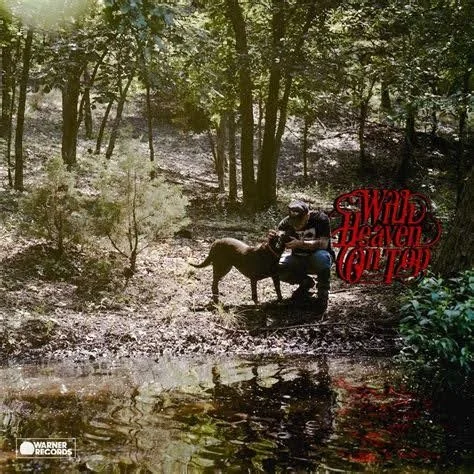
Image Credit - AOTY
Zach Bryan scrambles into his newest album, With Heaven On Top, hot off the heels of an insane few years. In 2023 he released his self-titled album, which was followed closely by 2024’s The Great American Bar Scene. Both albums are absolute behemoths, sitting around an hour long and stuffed full of features, ballads, rock-country anthems, and Bryan’s typical song structure that bounces between hyper-specific memories and sweeping statements about love, loss, and addiction. In most of his songs, Zach Bryan uses specific memories to build to a larger point: a thesis with supporting evidence, supporting evidence that looks like a collage of memories. This is clear in “Hey Driver” (ft. The War and Treaty), from Bryan’s self-titled album and a personal favorite of mine:
The Klonopin ain't kicked in
And I missed my sister's call
Hey, driver, I'm so tired
Of the ways of this old world
“Hey Driver” is a song about running: running out of energy and running away. These lyrics more clearly show the idea of running out of energy. Bryan gives these specific examples of Klonopin and calls, and connects it to this larger exhaustion, all tied up within this framing of a “driver” (throughout the song Bryan is talking to his driver). Bryan uses concise, great songwriting here by using specific memories and a framing device to show this larger idea.
Yet Bryan is a truly exceptional writer when his memories stand for themselves: they paint a larger picture of how Bryan sees and feels the world, but also create deep emotion by themselves. The collage holds both on the sum of the parts and on the individual elements. This is seen in “Bass Boat” on The Greatest American Bar Scene, arguably one of the best Bryan songs of all time:
'Cause I was raised by a woman who was hardly impressed
And I carry that shit real deep in my chest
'Cause I ain't ever been one for cheap excuses
Here, Bryan is doing something similar to “Hey Driver”: he uses this memory to set up a larger point about his perception of the world. However, in “Hey Driver”, the lyrics about calls and Klonopin aren’t that great in and of themselves. In “Bass Boat,” however, this first lyric about his mom is exceptional, simple, and tragic; for many other artists, it would stand by itself. However, Bryan continues on: he shows us this memory, and then connects it to a larger point about how he sees the world.
Bryan wants to be known as a songwriter and certainly has the prowess, but the lens of his fame in the past year has shifted as he has become embroiled in two large conflicts. The first comes from his breakup with Brianna Chickenfry, a podcaster, who alleged that Bryan emotionally abused her, and offered her 12 million dollars to sign an NDA (that she refused) after the break-up. The second was when Zach Bryan released a snippet in the fall of the song “Bad News” from his newest album that included lyrics critical of I.C.E..
ICE is gonna come bust down your door
Try and build a house no one builds no more
This snippet was released before the new album, and stirred up a whole right-wing reaction over Zach Bryan and his music.
With Heaven On Top comes straight from these years of insanity in Zach Bryan’s personal, musical, and public life. Despite all this turmoil, he starts this album the same way he did the last two: with a spoken-word poem. This album’s entry: “Down, Down, Stream”, is a worthy contender for the Zach Bryan poem museum. It is stuffed with memories, convoluted by metaphors and unnecessary vagueness, and has some beauty packed between the lines. There’s nothing new about this poem for Bryan, but that speaks more to his consistent lyrical skill than anything particularly boring about this poem.
The rest of the album continues in the same lyrical style as “Down, Down, Stream”, though oftentimes it lacks the quality. “Runny Eggs” serves as an extremely unfocused, plucky-guitared song about finding home and Jesus. “Appetite” struggles to land on any great musical or lyrical moment as it ponders kids, fame, and drinking. Consistently, the larger metaphors here and across the album are vague, uninspired, and rarely expanded upon. Why are runny eggs an idea of home and self? Why is the emphasis on appetite if none of the rest of the song really seems to be about wanting more?
Even when these metaphors make sense, specific memories, key to Bryan’s identity as a songwriter, feel flat on this album. This is for two reasons: first, many of these memories have been overused by Bryan. It feels like I’ve heard Zach Bryan talk about more sunsets than I have ever seen, more late nights than days I’ve been alive. These memories also fail because they seem like they are no longer possible for Bryan. He talks about making a pallet in an empty cold apartment in New York in “Down, Down, Stream,” something I fail to believe he has done recently. These memories feel fabricated or far off, like they happened to a Bryan from five years ago, not the megasuccessful, rich Bryan writing today. This gap makes the life Bryan paints (rough at the edges, torn, full of hard-earned joy) feel far off: memories here are less lived in and vibrant than on previous albums.
Many songs on this album are frustratingly close to excellent. “Skin” is a thoroughly vindictive and dramatic break-up song, though because it only focuses on post-relationship emotions the drama feels a bit unearned, especially if we consider this the first official breakup song on the album. “Bad News” serves as a justly angry and somehow not cringey political song, an anti-I.C.E. anthem that Zach Bryan appropriately mixes his own experiences into..
Bryan runs out of time to tell any sort of cohesive story on many of these songs: his pen is keen to ramble, and he doesn’t give himself the space to ramble within larger story structures. I’m sure these songs make sense to him, but to an outsider many are too vague or lack any real roots. Bryan fails here at meeting the high bar set by his own previous songs and by the country music tradition of storytelling. His overcrowded vignettes often blur until nothing but a mess of a song is left.
“Cannonball,” the next song on the record, serves as an antithesis for many of the problems on this album: it is Bryan at his best and I’m glad to see it. The song is a wispy West Coast bandit ballad about adventure and loss with enough melodic excellence and strip mall nostalgia to make me feel homesick on the first listen. A mixed metaphor of a cannonball, however, fails to pull the beauty out of this song.
Won't you wait a few hours there by the door? We've all been here before
But you stood up on your own, your mom called my telephone
Said you've been standing and rambling about gambling
And howling out in the night high in Yosemite
As he sings, Bryan speeds through these lyrics, especially when he sings “standing and rambling and gambling.” There’s a sense here, both in the words and performance, that whoever Bryan is chasing can’t seem to stop moving. This plea to stay, desperate and forlorn, is directed at someone who seems eternally restless. This is supported by the way the song stretches out: images of Yosemite, beaches, and Reno all clash against each other, and a feeling that there is always more permeates the entire song.
“Plastic Cigarette” is the clear streaming hit so far, and probably because of Bryan's opening line: “Well, I ain’t written a love song in so long.” Up until “Plastic Cigarette,” the vast majority of the album is messy, all over the place, and lacks a pure love song. The album is filled with emotional confusion that represents itself as lyrical foginess, and here “Plastic Cigarette” comes as a breath of fresh air: simple love, not much else. “Plastic Cigarette” is Bryan back at his most Bryan: this is a love song tied together by his classic tropes of alcoholism, growing up, and beauty. This song isn’t exceptional, it certainly won’t be one of the ten songs he is remembered for, but it feels like a quality return to form on an album that consistently loses itself.
The album rambles on, stops by one of the best lyrics on the album (“I’ll start a forest fire with my family tree” from “Aeroplane”), and arrives at “With Heaven On Top,” the last song. This closing track is an invitation to the corners of life where Bryan claims to live throughout his music: sunsets, heartbreaks, the anger, military, and broken down Jeeps that span the country as a guitar plays gently in the passenger seat. It’s a beautiful song, but the main metaphor of heaven on top, God being most important, fails to earn its place. That being said, I’ll take this messy metaphor if it means I get the rest of the lyrical beauty. This song also earns some goodwill, considering it is the last song on the album: it offers escape.
With Heaven On Top, the album, is a slog to get through. Painfully inconsistent, it lacks both anything specific to say or any cohesive, interesting way to see it. Memories are faded, metaphors unearned, and ramblings more confusing than endearing. One has to ask why the album feels this monotonous? Maybe it’s the music: the slow moments aren’t as slow and the fast not as fast as some of his previous work. This, combined with the shortness of many of these songs help this album blend into one musically one-dimentional piece of work. The complete lack of features, something that always helps Bryan bring his best, make this album feel like a repetitive, winding monologue without a break.
In terms of the lyrics, maybe this album fails because of how Bryan wrote it: over a few months, holed up in rental homes with his band. Maybe these songs have suffered without the time or space for Bryan to breathe when writing them. Or, perhaps most existential, Bryan has simply run out of things to talk about. His insane musical output means that he has covered most of the major experiences of his life, and many of the new ones he seems unwilling to talk about: his relationship and break-up with Chickenfry is barely touched on, and his new romance and marriage with Samantha Leonard Bryan also goes as a stone uncovered. Choosing privacy is fine, but Bryan has simply run out of things to say, or at least any interesting way to say it. For now, he will stay at his guitar, pointlessly strumming and humming, toying at scraps.