Sequoyah’s Revised Stewardship Program: What’s Changed?
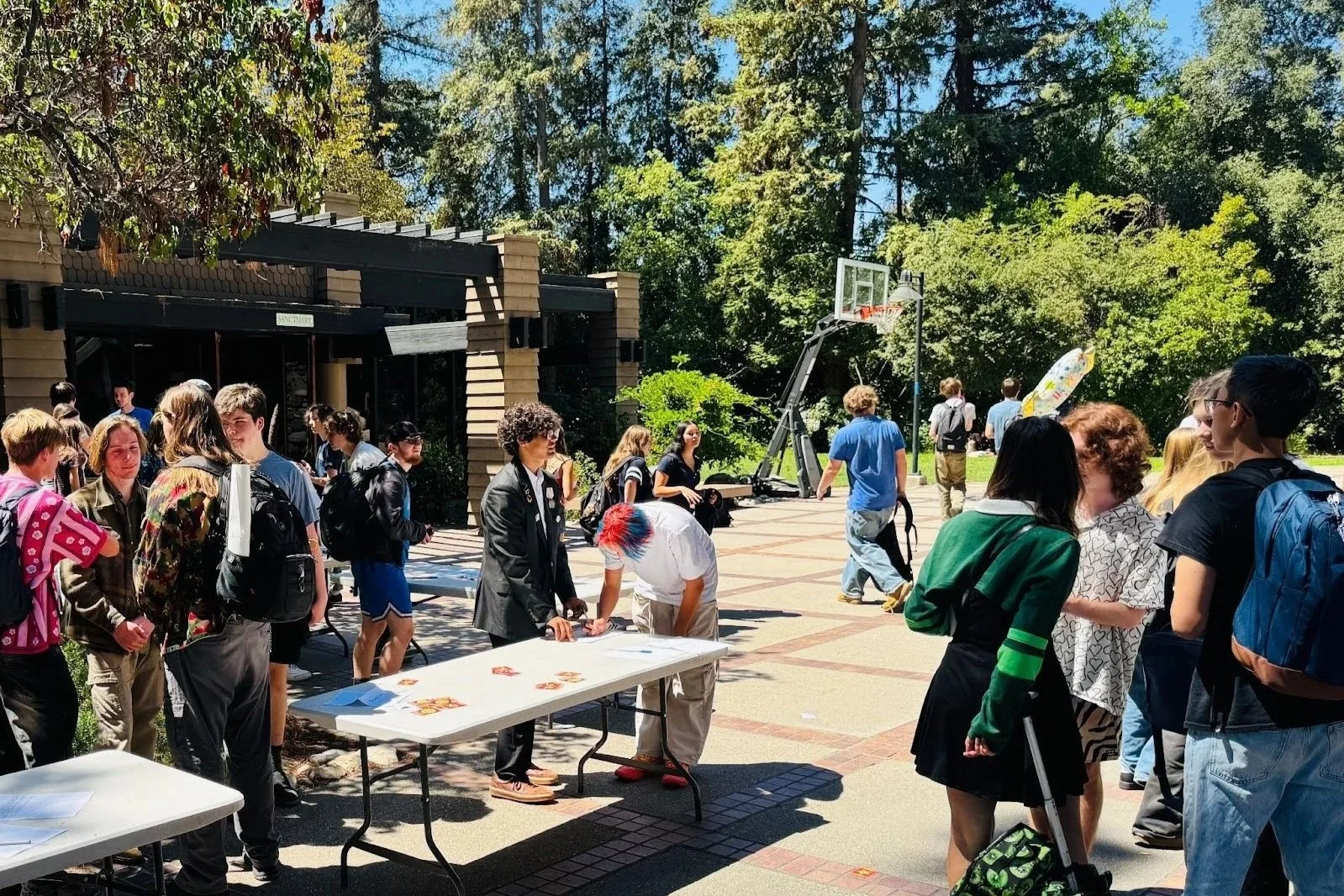
Stewardship, an important value to the Sequoyah community, is both a Habit of Mind (a core school principle) as well as a program at Sequoyah’s high school. While the Habit of Mind remains, the program has undergone significant changes, to the satisfaction and dissatisfaction of students. Previously, the Stewardship program took place between C-block and lunch every Friday, a fifty-five-minute period of both action and inaction. In lieu of this fifty-five-minute block, Stewardship now takes place during lunch and sometimes Wednesday advisory. The Stewardship fair, a generally exciting event in which students pitch various stewardships and garner interest, remains, yet whether or not that excitement carries through the year is still to be determined. This new change indeed comes with pros and cons, and students and administrators alike have many thoughts to share about the new program’s development thus far.
The main groups affected by the changes to Stewardship are the Stewardship Chairs, who no longer have an allotted block on Friday to get work done. Instead, they can apply for time on Wednesday during advisory or hold sessions during lunch. Stewardship Chairs Rachel Youngstrom ’26, who runs K-12 Connections alongside Ila Rae Brookshire ’27, and Benjamin Silva ’26, who leads Spirit Committee with Aiden Byrne ’26, are overall disappointed with the program changes. Youngstrom explained one of the major issues she has encountered: “Lunchtime is a time that has a lot of functions already. You can meet with teachers; you can retake tests; you can… go to an affinity meeting or club meeting, and having Stewardship compete with all those other things is really difficult, especially because the other things usually have… a more immediate output.” She went on to clarify that retaking a test or meeting with a teacher can quickly impact a student’s grades, which are often considered more important than Stewardship activities. Thus, according to Youngstrom, Stewardship has become deprioritized and cannot outcompete other lunchtime programs unless chairs are offering incentives.
Silva noticed another issue, which Youngstrom also touched on. He shared that because Stewardship is now optional, fewer people are engaging with the program. “I feel like last year… it was better because we had more people,” he noted. “You could… force people to do stuff even if they weren't… that passionate about it.” While forcing a student to partake in a Stewardship might sound undesirable or harsh, Youngstrom pointed out, “Stewardship is a value that is very hard to teach, and for it to be successful, it must be forced a little.” She says that it’s extremely important to require students to participate “because all of the incoming freshmen have no idea what the Stewardship program used to be, so they’re less likely to sign up. And then sophomores who had a bad experience last year and didn't get to try again, they're also not signing up.” Thus, Youngstrom and Silva identified student participation and scheduling as two of the most important problems with the revised program.
Youngstrom and Silva, though largely opposed to the revised program, do point out some pros, echoed by Assistant Head of School and High School Director Marc Alongi. Youngstrom explained that with the new system, “There is a niceness of flexibility… We changed our meeting time because someone had a meeting… And I think the emphasis on deliverables this year is semi-good. But, I just feel like the [previous] program wasn't given a chance to go through revision.” Echoing Youngstrom’s appreciation for the flexibility of the program, Alongi noted, “We made a move to make the program more flexible and more student-centered. Part of that involves having two Stewardship cycles, one in the fall and one in the spring, where students can propose their own committees, whereas in the past, those committees were predetermined, mostly by faculty and administration.” Alongi acknowledged that there are still some kinks to work out, but has a positive outlook for the future of the program because of the student-centered approach. One of the major benefits he pointed out was being able to propose new (and dissolve old) Stewardships biannually, allowing students to tackle new and relevant issues. On a separate note, Silva mentioned that because Stewardship is no longer required, those who choose to join are truly passionate about the respective Stewardship they’re a part of.
The Stewardship program, which is both offering new opportunities and posing new challenges, is one that is still being developed. Student Government Co-President Hart Lippsmith ’27 explained that one of the goals for Student Governments was to make Stewardship exciting. He noted, “Student participation [is] really hard to foster, especially genuine student participation. I think what needs to happen is a cultural shift out of the self and into our school as a whole.” He adds that students need to start asking, “How can I help make my school a better place?” Ultimately, his job, as well as others’ in Student Government, is to serve as a communicator between students and administrators. Moreover, with the upcoming Stewardship Fair, Student Government hopes to continue to communicate with Stewardship Chairs and make the program the best it can be.