Reconnecting Communities 710 Advisory Group Holds Final Community Workshop
EDITORS' PICK
-
EDITORS' PICK -
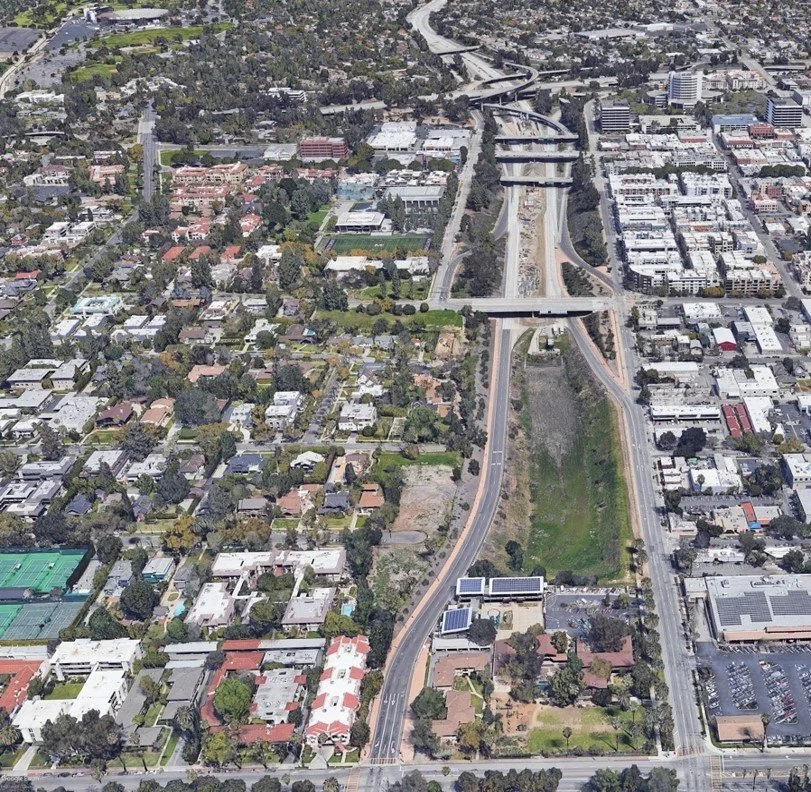
Image Credit - City of Pasadena
On a cloudy Saturday morning on September 13, 2025, Friendship Pasadena Church welcomed residents, advocates, officials, and planners into a community workshop that could reshape the future of the city. Among the panelists were key figures such as Assistant City Manager Brenda Harvey Williams, Director of Water and Power David Reyes, and Director of Planning Jennifer Paige. Together, everyone gathered to be a part of the last community input meeting for the “Reconnecting Pasadena 710 masterplan.” The event wasn’t just another city planning meeting, it was something deeper—an attempt to heal a decades-old wound.
Behind Sequoyah School’s K-8 campus lies the remnant of a vision of a grand highway extension. Known locally as “the stub,” the abandoned stretch of highway was intended to connect Pasadena to Long Beach via the 710 freeway. After decades of strong community opposition, the 710 freeway extension was officially canceled in 2018. Sequoyah School Director of DEIJ and Community Engagement RJ Sakai shared “I remember as a seven-year-old going to ‘No 710’ protests in South Pasadena, marching on streets holding up ‘No 710 signs.’” In 2022, the city of Pasadena reclaimed the disconnected stretch of roadway that was previously owned by Caltrans. The stub is now on the brink of potential redevelopment.
A central theme of the workshop was restorative justice. The goal of restorative justice is to acknowledge and respond to past harm. In this case, thousands were displaced during the construction and planning of the freeway in the 1970s. The neighbourhood that was displaced was a thriving working class community. The majority of residents were low income individuals and people of color. The displacement of low income and minority groups was a national trend in city planning at the time. Pasadena resident Dave Stein, who attended the meeting and lives near the stub, said “Restorative justice to me isn't just… learning lessons from things that weren't correct that you did in the past, but it's also trying to make people whole for what damage might have been done to them during that time.” Addressing the needs of the current community is one thing but how the city makes amends to the actual families who were forced from their homes against their will is another. On this, Stein added, “I wasn't so convinced, or maybe we didn't go deep enough, that they really were going to attempt, along with the state and the county, to truly repair some of the damages done to the actual families, families that had to uproot themselves and give up their property.” Stein voiced skepticism on whether real reparations would be made, urging the city and state leaders to not overlook the people most directly impacted by the freeway’s construction decades ago.
For many, the 710 extension represents a 20th century idea rooted in outdated priorities—one where cars and concrete are prioritized over people and place. Local resident Nancy Montuori recalled that back in her day the area along the 710 freeway was called “the diesel death zone.” She explained that the constant truck traffic and idling engines led to serious air quality issues. The current reconnection plan is a rare opportunity to rethink that legacy instead of continuing the mistakes of the mid 20th century. The plan offers a chance to heal a wound on the community that was caused so long ago. Planners and community members are envisioning a new kind of space that supports community life and adds character to Pasadena. The city wants it to be a destination not just for the community, but for the entire L.A. area. It would be a walkable place built around human connection, not traffic, with values such as sustainability, mobility, and equity. The goal is not just to remove a freeway, but to create something better, something people-centered rather than a car-oriented nightmare. Central to this vision is the importance of mobility.
Mobility was a widely discussed topic at the meeting. The panel of city officials emphasized the importance of a broad range of transportation options–transit options that make more sense in the modern day. Today, transportation must be about moving people rather than cars. The panel emphasized that key to this idea is the vision of walkability. Walkability is the lifeblood of a healthy public transit system. This means planning new infrastructure that supports walkability–such as safe, inclusive neighbourhood streets. Such streets are ones that are designed so families can walk safely, kids can bike to school, and seniors can easily access parks and shops. Walkability is just one piece of the larger mobility puzzle. Reimagining how we move through our cities requires expanding transit networks, building bike lanes, creating space for alternative, low carbon options like e-bikes and scooters. True mobility means giving people real functioning options so that owning a car isn’t the only practical choice. It means designing a multimodal transportation system that is inclusive of everyone, regardless of income, age or ability. The Reconnecting Pasadena 710 project has the opportunity to influence the way people live, thrive, and move in Pasadena.
For decades, the stub represented not just a physical divide in the community, but a symbol of a deeply flawed vision of the future. Now that the freeway segment has officially been cleared for redevelopment, the City of Pasadena faces a critical decision: How can this land be used to repair past harm, and how can it be used to build a better future?
The panel suggested uses like dense affordable housing, green space, paseos, businesses, and new streets. During the meeting, the public also had a chance to weigh in on how the land should be used, and the results (submitted online) made it clear that residents want more public space and amenities. Sakai said, “I would love to see uses that are open to the public,” citing parks, gyms, and athletic courts as possibilities. He wanted spaces where “community members… can come and play a game of basketball or have a picnic on the lawn.” So clearly, based on public opinion, the priority should be building an equitable community-based space rather than building luxury developments or commercial projects that cater only to the wealthy. Officials described a vision of a space that fosters social connection, promotes health, and reflects the overall character of Pasadena. Beyond these community values, the panel mentioned potential for meaningful economic growth. Thoughtfully planned areas can attract foot traffic, support local businesses, and create opportunities for events. Lorelei Curren-Evans ’28 emphasizes that power over the space should belong to the people. She envisions “Building a space that… the community gets to decide instead of the city, who may want to just… profit off of it for their own benefit.” That desire for community control is reflected in the growing support for mixed use zoning design that blends commercial, residential, recreational, and cultural spaces to create vibrant, walkable neighbourhoods. Parks, community centers, and local businesses could replace the freeway ditch that once divided the city. The panel officials say that thoughtful land use planning will be key not only to stitching the city's urban fabric back together but for addressing present-day challenges such as housing affordability, climate resilience, and equitable access to resources.
As the Reconnecting Pasadena 710 project moves forward, the city faces a pivotal moment. Sakai sends this message: “If you go to school in Pasadena… This is a huge project of your lifetime. You will become an adult, and who knows? You could live there. You could raise a family there. You could work there… Young people should pay attention to this.” This is a moment shaped by history, community input, and the urgent need for a more equitable, balanced future. Whether the city delivers on its promises such as restorative justice, inclusive mobility, and sustainability remains to be seen. As Montuori told me, “Action [speaks] louder than words… Stop talking about it. Just do it.” What happens next will determine not only how the stub is transformed but also how Pasadena chooses to define itself as a city for generations to come.