Sequoyah Debate Team Competes at First Harvard Tournament
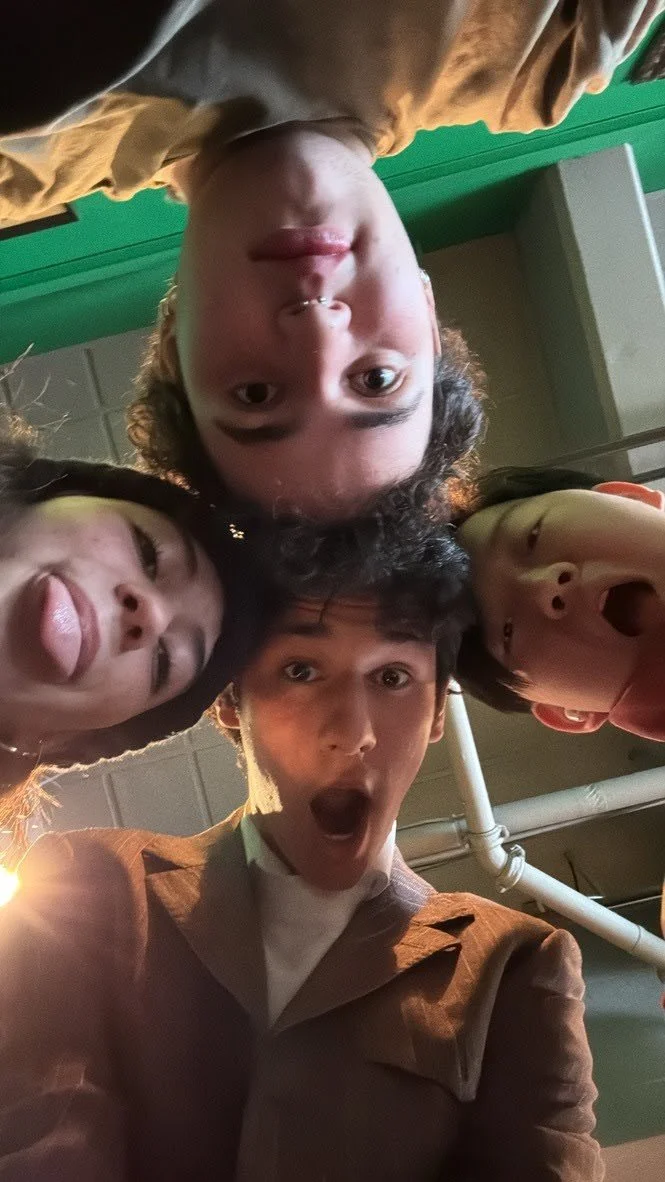
On February 13th-16th, the Sequoyah Debate Team participated in its first out-of-state travel tournament. Over three jam-packed days, the team debated in twenty-five rounds, won the majority of rounds, received a first place speaker award, and managed to survive the horrendous group smell, created by hundreds of debate kids who seemingly have not yet discovered deodorant.
The trip managed to just squeeze into a four-day weekend: a delayed flight on Friday led to a red-eye on Friday night, resulting in quite a bit of group delirium for the rest of the trip. The team managed to push through, though, getting a bit of sleep before debating all-day Saturday and Sunday, with just a few rounds on Monday morning before a flight home that night and an after-midnight arrival in LAX.
Through the chaos, the team managed to exceed expectations and grow exceptionally. Humanities teacher Ian Gutgold, also Sequoyah’s Debate coach and world-renowned pop appreciator, said that the tournament “felt like a time accelerator" for debate skill, due to debaters’ commitment, open-mindedness, and ability to take feedback. Tournaments provide the best opportunity for debate growth: instead of practice rounds spread out across weeks, the consistent feedback and immediate ability to try again and improve, coupled with the compelling and competitive effect of tournaments, helps debaters grow. The newest debater on the team, Eliana Salinger-Ambriz ’30, agreed with Gutgold and noted, “I feel like the last round I did was definitely so much better than the beginning of the tournament, and I got better.”
Sequoyah’s debate style, which tends to consist of slower speaking and less evidence with a focus on logical reasoning, clashed with other fast-speaking, statistic-overloading debaters. Gutgold said, “I think that Sequoyah students are very invested in the substance of the arguments and in the historical underpinnings and the policy underpinnings of the positions they argue.” This is the point, not a quirk, of the Sequoyah debate program: to teach how to create unique arguments, argue them coherently, and engage with other arguments in a well-meaning way. This can, unfortunately, create problems, as many of the debaters at this tournament were more technical and rule-based than the Sequoyah team. Throughout the tournament, new debate lingo (including “lay” and “K”) pervaded. Pluto Gunsberg ’27 said he struggled with the technicality of debate, but the fact that the team has such a good grasp on the fundamentals will make learning technicalities easy.
Between rounds, the team had an excellent time. “Harvard has been really cool—it is so different from LA. It is so different from anything we’ve ever done before,” said Gunsberg. Sequoyah’s team made the most of this new city and experienced as much as it could, eating new food, searching book shops, and exploring Harvard. Highlights included “exploring the town in between rounds,” according to Salinger-Ambriz, and “walking to Assembly Row to get lunch with alumni Sam Almo-Milkin,” according to Jessica Flowers, faculty chaperone,Sequoyah’s College Counseling and SIP Coordinator, and Sequoyah icon.
Some side quests added interest to the trip. On Friday, in between rounds, members of the team were doing the Lush Life dance (a TikTok dance to recent Khia Asylum escapee Zara Larson). Behind them, they saw some kids trying to secretly film the dance. Salinger-Ambriz said, “they’re just jealous.”
On Sunday night, after two long days of debate, the team all returned to the AirBnB with Chinese food and a dream of watching Legally Blond. That dream was fulfilled—quite properly—as the team wore face masks, ate cookies and popcorn, and watched what is basically the team's biopic. Going from LA to Harvard? Check. Being the best dressed people in any room? Check. Bringing a sense of joy into new and exciting places? Check. Professional arguers? Check. Show-stoppingly iconic? Check.
For the rest of this year and years to come, the team is excited to welcome new debaters. The team plans on turning away from the single-debater format and returning to teams. Flowers said that “the team is really fun, so the vibes on debate are great.” Gutgold added, “It’s an incredibly fun, close-knit community that is committed to helping everyone improve.”